 Isaiminitips.com
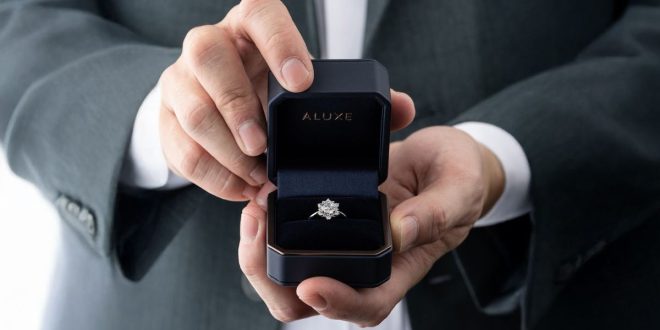
A diamond may look like a small piece of ice, but its appearance depends on a precise arrangement of surfaces. Light enters, travels through the stone, reflects off its internal facets and returns to your eyes. Change the angles of those surfaces, and the same material can produce a very different display. The difference is not merely decoration. It is the result of how the diamond interacts with light.
When comparing diamonds, learning what defines an ideal cut diamond can help you look beyond carat weight and the neat rows of figures on a grading report. Cut influences how lively a stone appears, how its bright and dark patterns move, and how effectively it returns light. Understanding these effects gives you a more useful way to judge what you are buying.
Cut Is Not The Shape
People often use the word cut to describe a diamond’s outline, but the two ideas are different. Shape refers to whether the stone is round, oval, pear-shaped or another form. Cut refers to the arrangement and finish of its facets, including their angles, proportions, symmetry and polish. A round diamond can have a weak cut, just as two oval diamonds can behave very differently under the same light.
Think of the facets as a system rather than a collection of tiny mirrors. Their positions determine how light moves inside the stone and whether it escapes through the bottom or sides instead of returning towards the viewer. A diamond can have excellent clarity and colour yet still look less lively if its cutting does not manage light well.
This is why a higher price or a larger weight cannot, by itself, guarantee a more beautiful diamond. Those measures describe important qualities, but they do not tell the whole story of the stone’s visual performance.
Three Ways Light Appears
Diamond sparkle is often discussed as though it were one effect. In practice, several effects work together. Brightness describes the white light returning from the diamond. Fire refers to flashes of spectral colour, like small bands of red, blue or yellow. Scintillation describes the changing pattern of light and dark as the diamond or the observer moves.
A stone that looks bright when held still may not produce the most appealing pattern in motion. Some dark areas are part of the contrast that makes bright flashes visible; a diamond that appears uniformly bright from one angle may offer a less distinct pattern as it moves. The goal is not simply to remove every dark patch, but to find a balanced, lively appearance.
Lighting matters as well. Strong spotlights can make many diamonds appear dramatic, while softer lighting may reveal differences that were less obvious in a showroom display. A useful comparison therefore includes more than one lighting condition and more than one viewing angle.
Proportions Work Together
A diamond’s table, crown, pavilion and overall depth influence how light travels through it. These measurements are connected. Changing one proportion can alter the effect of another, so a single measurement rarely provides a complete explanation of performance.
Imagine two round diamonds with similar carat weights. One may have a broad table and a shallow pavilion; another may have a different balance of angles and depths. Their face-up sizes might be comparable, yet their brightness, colour flashes and dark patterns may differ. The proportions must work together, rather than each being judged in isolation.
This is where the term ideal cut needs careful interpretation. Grading systems and sellers may use different standards or additional criteria, and the familiar cut-grade scale for round brilliant diamonds does not apply in exactly the same way to every fancy shape. Ask which grading standard is being used and what evidence supports the description, instead of assuming that one label means the same thing everywhere.
Compare The Actual Stones
A grading report helps you understand a diamond’s documented characteristics, but it cannot fully recreate the experience of seeing the stone. Reports and optical images provide useful evidence; viewing the diamond reveals how its light pattern appears to you in real conditions.
When comparing two candidates, keep the conditions as similar as possible. Look at each stone from a normal distance, tilt it gently and then view it under less intense lighting. This reduces the chance that a dramatic spotlight or a favourable angle will determine your choice before you have really compared the diamonds.
Use a short checklist to keep the decision grounded:
- Does the stone look lively when you move it slowly?
- Are bright and dark areas arranged in a pattern you find appealing?
- Does the appearance remain attractive outside intense showroom lighting?
- Do the grading report and any optical evidence support what you see?
The point is not to replace professional assessment with a quick visual test. It is to combine documented information with direct observation, rather than asking either one to do all the work.
Beware Of One Perfect Number
It is tempting to search for a single proportion, measurement or score that identifies the best diamond. The attraction is understandable: a complicated purchase becomes easier when one number seems to settle the question. But diamond proportions interact, and two stones with similar measurements can still show different optical patterns.
There is also a trade-off between strict specifications and individual preference. A tightly defined cutting range can help narrow a search, yet it may exclude stones that look excellent to your eyes. Conversely, a stone that meets a desirable number on paper may not produce the appearance you hoped for. Specifications are most useful when they guide comparison, not when they end it.
A practical decision rule is to shortlist diamonds that fit your budget and have credible grading information, then compare their visible performance side by side. If one looks noticeably brighter or more balanced to you, investigate why rather than relying on its label alone. That approach combines measurable evidence with the thing you are ultimately choosing: a stone you find beautiful.
Let Evidence Guide Your Eyes
Choosing a diamond does not require you to become a gemologist. You need enough knowledge to ask precise questions, understand what a grading report can and cannot tell you, and recognise the difference between a compelling number and a compelling stone. Cut is the meeting point between measurable geometry and what your eyes experience.
Take your time, compare the actual diamonds and look beyond the first impressive flash. When the evidence and your own observations support the same choice, you can decide with greater confidence—and enjoy the diamond for the way it performs in everyday light, not just the way it looks in a display case.


