Isaiminitips.com
In the field of professional visual infrastructure, structural safety serves as the fundamental prerequisite for any large-scale deployment. For a led display screen manufacturer, engineering a system that maintains mechanical stability under the stresses of high-altitude rigging and external environmental loads is a complex task. As event scales expand, the focus of technical directors has shifted from mere pixel performance to the reliability of the underlying framework. YES TECH has addressed these critical safety requirements through the MAir series, integrating advanced materials and redundant support systems to enhance operational security and long-term investment returns.
Advanced Material Integration for Structural Integrity
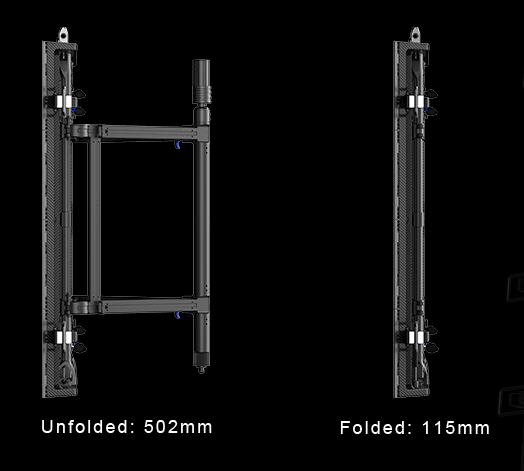
The mechanical stability of a large-format video wall for events is primarily governed by the cabinet’s ability to resist deformation under load. The MAir series utilizes an industry-leading carbon fiber integrated molding frame, strategically paired with a full-link metal supporting structure. This hybrid approach leverages the high tensile strength of carbon fiber while utilizing metal components for critical load-bearing points.
In high-altitude applications, where cabinets are subjected to vertical gravitational pull and potential torsional forces, this structural rigidity ensures that the entire array remains perfectly aligned. Maintaining a precise center of gravity is essential for preventing structural fatigue over prolonged periods. By utilizing lightweight yet high-strength materials, the system reduces the total load on the overhead truss infrastructure, allowing for safer deployment of expansive visual surfaces in both indoor arenas and outdoor stadiums.
Wind Resistance and Safety Protocols for Complex Environments
Outdoor installations face the unpredictable challenge of wind loads, which can exert significant lateral force on a display. To mitigate this, the wind resistance framework of the MAir series is engineered with an optimized force-bearing structure. The inclusion of a climbable wind-bracing system serves a dual purpose: it provides essential mechanical reinforcement against high-velocity airflow and offers secure access for technicians.
Structural safety is further enhanced by the precision of the hoisting system. Supporting a maximum rigging height of 25 meters, the system utilizes a multi-hole positioning design. This allows engineers to adjust the center of gravity flexibly, ensuring that the video wall for events remains plumb and balanced regardless of the curvature or tilt of the installation. The interoperability between the top hanging bars and bottom stacking beams further streamlines the mechanical setup, reducing the risk of component mismatch during high-pressure onsite construction.
Optimizing Installation Efficiency through Mechanical Safeguards
Safety in the LED industry is not only about the finished structure but also the process of assembly. The integration of magnetic positioning and pre-hanging functions within the MAir series allows for rapid, secure alignment of cabinets before the final locking mechanism is engaged. This reduces the manual labor required to hold heavy components in place, thereby decreasing the risk of human error or physical strain during the led display installation process.
For high-altitude maintenance, the power box is designed with dedicated safety apertures. These features allow technicians to secure tools and components during service, preventing accidental falls that could pose a hazard to personnel below. Furthermore, the use of captive screws throughout the assembly ensures that no small hardware components are lost or dropped during modular replacements. These seemingly minor engineering details are critical for maintaining a “Zero-Accident” environment in professional event production.
Reducing Operational Expenditure through Modular Reliability
Beyond immediate safety, the engineering of the MAir series focuses on the long-term reliability of the system, which directly impacts the Return on Investment (ROI). The modular architecture and universal module design allow for high interchangeability across different cabinet sizes. For a led screen supplier, this reduces the complexity of spare parts inventory and simplifies the training required for technical staff.
A system with high structural stability and low electronic failure rates significantly reduces “downtime”—the period when a screen is non-operational due to repairs. By minimizing the frequency of required maintenance and the time needed for each intervention, the hardware ensures higher equipment utilization rates. For large-scale rental operations, the combination of lower maintenance costs and extended service life provides a robust financial advantage, ensuring that the initial capital expenditure yields a sustainable profit margin over multiple project cycles.
Conclusion: The Synergy of Safety and Performance
The evolution of display technology is increasingly defined by the invisible engineering that supports the visual output. The MAir series by YES TECH demonstrates that structural innovation—ranging from carbon fiber frames to precision hoisting systems—is essential for the safe execution of modern visual spectacles. By prioritizing mechanical safeguards and ease of maintenance, the system provides a reliable infrastructure that protects both the audience and the technical investment. For organizations seeking a professional video wall for events, understanding these engineering principles is vital for selecting a platform that delivers performance without compromising on safety or structural longevity.