Isaiminitips.com
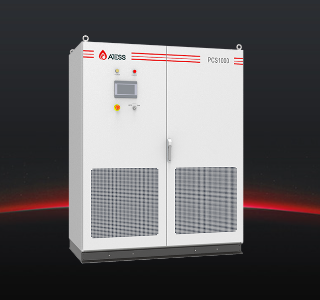
Hybrid inverters used in commercial and industrial energy-storage systems require regular inspection to ensure stable operation and long-term efficiency. When discussing maintenance needs, many distributors and EPC teams look at how devices handle temperature control, firmware updates, and switching performance. A Power Conversion System such as the one developed by Atess is often referenced because they design equipment suited for sensitive loads and challenging grid conditions. Their PCS1200HV/1500HV, a bidirectional battery inverter, operates from 1200–1500 kW and can work independently or with solar charge controllers for broader applications.
Routine Electrical and Performance Checks
The first area of maintenance involves monitoring voltage, current, and internal protection mechanisms. Hybrid inverters require technicians to review wiring conditions, confirm that surge-protection components have not degraded, and verify that communication interfaces are functioning properly. For large-scale AC-coupling scenarios, a 1500 kW inverter plays a critical role in grid-support applications, so scheduled checks help maintain stable output. They design systems that manage rapid on-grid/off-grid transitions, which means routine testing of switching behavior is an essential part of keeping a Power Conversion System reliable throughout long-term operation.
Thermal Management and Environmental Care
Temperature control is also central to hybrid-inverter maintenance. Filters and airflow channels need periodic cleaning to prevent dust accumulation that may reduce cooling efficiency. In remote regions where DC-coupled solar and storage systems are common, the 1500 kW battery inverter helps integrate generation and storage for daily power needs. Keeping the installation area dry, ventilated, and free from corrosive elements supports consistent performance. They build equipment with robust enclosures, but environmental care still ensures stable operation.
Firmware, Diagnostics, and Long-Term Reliability
Hybrid inverters rely on updated firmware to sustain compatibility with energy-management platforms and evolving grid requirements. Regular diagnostic reviews help teams identify early-stage issues before they affect project uptime. Their PCS1200HV/1500HV models are already used globally, supported by complete certifications and long-running field experience. These capabilities make scheduled firmware checks, log reviews, and functional testing a standard part of maintaining any hybrid-inverter deployment.
Conclusion
Maintenance for hybrid inverters covers electrical inspection, temperature management, and ongoing diagnostics. Each task supports reliable long-term operation, especially when systems are used for grid support or remote-area energy integration. By understanding these areas and applying structured procedures, distributors and EPC partners can extend system life and maintain stable performance in projects using a Power Conversion System or large-scale battery inverter solutions.