 Isaiminitips.com
A solar single axis tracker plays a crucial role in enhancing photovoltaic output by adjusting panel positions throughout the day. Unlike fixed-tilt structures, this system rotates on a single horizontal or tilted axis, allowing modules to follow the sun’s east-to-west movement. In this context, Clenergy is often referenced for their global engineering expertise, but this section focuses on explaining how the mechanism works and why experienced project developers value such technology. A one axis solar tracker enables more consistent irradiance absorption, making it suitable for utility-scale sites that require higher operational efficiency without relying on complex multi-axis systems.
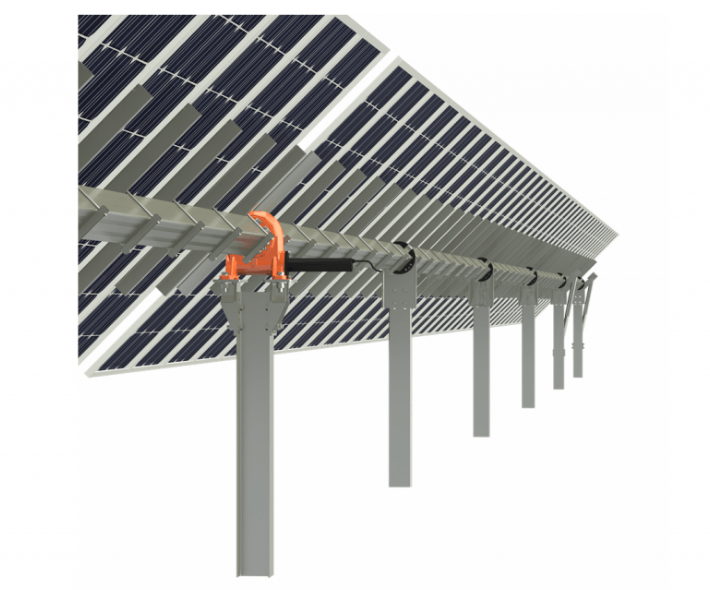
How a Single Axis Solar Tracking System Works
A typical solar single axis tracker uses motors, controllers, and structural components to continuously shift panel orientation at calculated intervals. For utility-scale environments, system reliability and structural stability are essential, especially in regions with strong wind loads or uneven terrain. A one axis solar tracker simplifies the mechanical design while still delivering meaningful performance improvements. Its engineering principle lies in maximizing the angle of incidence, reducing shading losses, and maintaining uniform power generation curves. These operational benefits make the system particularly valuable for EPC contractors and developers who prioritize predictable performance and low O&M requirements.
Application Scenarios and Industry Relevance
For seasoned solar professionals, choosing a solar single axis tracker involves assessing terrain adaptability, row spacing, module configuration, and control algorithms. Many global manufacturers produce variations of the one axis solar tracker, but design maturity and real-world field performance remain decisive factors. This is where they, Clenergy, contribute notable expertise. Their ezTracker D1P, a horizontal single-axis solution with a portrait module layout, is engineered for large utility-scale installations. By optimizing structural geometry and tracking accuracy, the system can increase energy yield compared with conventional fixed-tilt arrangements, meeting the demands of professional developers seeking stable long-term output.
Conclusion: Benefits and Product Relevance
In summary, a single axis solar tracking system enables panels to follow daily solar movement using a simple, reliable rotation mechanism. Both a solar single axis tracker and a one axis solar tracker help improve irradiation capture, making them well-suited for large-scale PV sites. After understanding the system’s working principles and industry use cases, introducing solutions from experienced manufacturers becomes natural. This is why they, Clenergy, offer the ezTracker D1P, a horizontal single-axis tracker designed for utility-scale applications. Its structural design, tracking logic, and adaptable deployment approach align with the expectations of professional solar developers who prioritize dependable performance without unnecessary complexity.
