 Isaiminitips.com
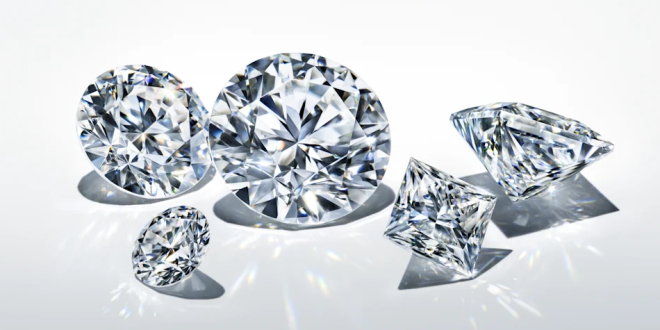
Behind the shining retail showcases and curated boutiques of luxury jewelry stretches a complex, sprawling secondary market that few consumers never get to see. This ecosystem of estate dealers and auction houses, private collectors and specialized intermediaries, is said to facilitate billions of dollars in transactions of pre-owned jewelry each year — all according to a set of principles that are markedly unlike those for primary retail. Learning about this parallel universe tells us not just how jewelry circulates economically, but also how value, authenticity and desirability are debated on the terrain where brand mystique grapples with market reality.
The Four-Tier Structure
There are four different layers in the secondary luxury jewelry market, all of which have different economics, demographics and fundamental value propositions.
Tier 1: Institutional Platforms comprise mostly top houses (Christie’s, Sotheby’s, Bonhams) selling exceptional pieces—historical jewels and big gemstones or anything with celebrity provenance. These are the entities that provide authentication, publicity and entry to U.H.N.W. buyers around the world. Their auctions are theater as much as commerce teams — complete with previews, catalog descriptions that read like literature and bidding behavior sometimes at odds with rational economic models. Commission structures average 15-25%, so this tier is reserved for pieces hefty enough to justify those incurring costs.
Tier 2: Specialized Dealers Dealer specializations — some buy only signed pieces by famous makers, others specialize in stones and gems and not gold or platinum — are often as specific as artist representation at a gallery.” Bkk Diamond might be the ecosystem’s workhorse position for much of the business pouring out between private sales and auction-level spectacles. These businesses offer cash on the spot, professional authentication and buyer networks, trading with lower overhead than auction houses. They cater to consumers who want to sell inherited or unwanted jewelry as well as buyers looking for high-end pieces at prices that are discounted from retail.
Tier 3 (Semi-Professional Intermediaries) include jewelry buyers who do not sell out of a storefront — buying from the public and selling to dealers or refiners. Traveling buyers, online-only operations and individual entrepreneurs populate this tier. Their margins are based on information asymmetry: They make money when sellers don’t know the real value of their jewelry and take lowball offers. Although some conduct business admirably, the overwhelming majority is predatory at best.
Tier 4 – Peer to Peer Markets Participants in my research purchased and sold from individuals via online platforms (eBay, Worthy and I Do Now I Don’ t), social media market places or local classified ads. This tier enables sellers to achieve the highest potential proceeds, but they have to handle the authentication, pricing, marketing and transaction risk on their own. There are common forms of fraud or misrepresentation as well as ongoing payment issues at this level.
The Authentication Imperative
Authentication is the secondary market’s core dilemma and selling proposition.” Buyers trust the purchase of a bracelet by Cartier – that comes directly from Cartier. When that same bracelet resurfaces years later on the secondary market, how can new buyers be sure they’re getting the real deal?
This brings us to a whole new authentication infrastructure. Specialists acquire knowledge of specific manufacturers’ techniques: tiffany’s distinctive prong settings, van cleef & arpels’ signature clasps, the evolution of cartier hallmarks through the decades. Upmarket dealers have relationships with brand boutiques that offer unofficial authentication services. Gemological laboratories certify stones. Appraisers provide valuation documentation.
Yet authentication remains imperfect. High-quality fakes are out there, especially of the ultimate luxury labels. Some forgers intentionally age pieces to appear as though they’re vintage. Some use authentic findings (real Cartier clasp on fake bracelet) so as to pass casual inspection. The best can replicate hallmarks, serial numbers and even gemological details.
This authentication problem adds value to the trusted dealers who develop knowledge and take on authentication risk. By guaranteeing that an object is authentic, Bkk Diamond is essentially insuring it against very well-done fakes — value in exchange for the margins they have built into its pricing.
The Provenance Premium and Discount
History of ownership cuts two ways in secondary markets. The celebrity provenance can actually add tremendous value — Elizabeth Taylor’s jewels went for several times intrinsic worth, purchasers paying a premium price for more than just the stone, but also its story. Finally, important historical provenance (that jewelry was once owned by royalty, given to someone important, worn at a notable event) also leads to high prices.
Conversely, bad provenance—being associated with scandal, crime or tragedy—tends to bring down value. Some buyers are reluctant purchasing jewelry with dark histories, which is to say that they shape what could be called “karmic discounts.” More prosaically, jewelry that can be traced to theft or fraud can legally be confiscated even from purchasers who act in good faith, thereby creating risk that depresses prices.
Most secondary market jewelry, however, comes without any significant provenance. It belonged to just plain folks living their lives. In this, the lack of provenance itself becomes an information type on its own—the jewelry has to be justified on grounds of being independently valuable other than upon self-referential context.
The Brand Premium Erosion
One fascinating things about secondary markets is how brand premiums fall away when jewelry exits primary retail channels. A Tiffany engagement ring could cost 30-40% more than a like-for-like unbranded ring simply on account of the blue box and brand kudos. As soon as that ring goes into the secondary market, a lot of this premium is gone.
The attrition is an inevitably because brand premiums are based largely on purchasing experience, guarantee and social signaling value— all of which fall when buying pre-owned. The ring remains the same; presumably, though, the value of being able to say “I bought this at Tiffany” falls when the actual purchase was made from an estate dealer.
This high frontage allows for opportunities to the value range buyer prepared to eat a retail experience in order to get materially better quality at a fraction of the price. It’s also frustrating for sellers that paid premiums on a brand and thought they could get it back—a gulf that dealers, caught in the middle between buyer and seller expectations, have to manage carefully.
Interestingly some superluxury names (Graff, Harry Winston at rarefied levels) retain higher markups in the secondary markets because their real differentiation is quality/rarity rather than marketing-derived prestige. The collective aftermarket strength of these brands implies that actual material superiority trumps brand stories when it comes to preserving long-term value.
The Liquidity Spectrum
Liquidity also varies dramatically by category of jewelry on the secondary market, ranging from near-cash to nearly illiquid.
Highest liquidity: Plain gold jewellery without stones is the highest in liquidity as content will melt down to commodity value – pure gold metal can be distilled from it and sold right away. Clearing prices exist everywhere, and are ever changing. Value is easy for any dealer to ascertain. Though refiners pay less than spot gold prices to address processing and profit, the transaction can finish in a matter of hours.
Moderate Liquidity: Certified diamond jewelry (from reputable labs like GIA/AGS) makes for a moderately liquid investment, as the certification adds standardization to its quality documents. Consumers can have more of an objective measure of value to go by, although pricing isn’t as standardized for diamonds as it is for gold. Very good diamonds (1+ carat, excellent grades) from reputable brands sell through pretty quickly; smaller, lesser-quality or uncertified stones move slower.
Low Liquidity: Colored gemstone jewelry, particularly without certification, is highly illiquid. And emeralds and rubies and sapphires, particularly rarer stones require specialized expertise to determine value. Treatment identification (heat, fill, irradiation) requires gemological analysis. And price is also a matter of very subjective aesthetic considerations. It takes time and access to segmented markets to find a buyer willing to pay a fair price.
Extremely Low Liquidity: Fashion jewelry are among the lowest price category including costume, damaged or broken items where they are valued for scrap (the weigh minus processing costs). But, because materials are base metals and stones synthetic or of poor quality, even clips with high initial retail value may have virtually no second-hand worth.
Understanding this liquidity spectrum is helpful in setting realistic expectations when choosing to sell pieces such as inherited jewelry purchased a couple of decades ago at prices reflecting no longer existent market conditions (“old retail”) or retail premiums that secondary markets do not value.
The Modification Question
Another interesting secondary market tension is whether to simply sell jewelry as it is or rework it to current tastes. Items of previous eras tend to have old-fashioned designs or settings that do not properly secure the stone by modern standards, or size that is unappealing for today’s buyers.
Generally conservative to retain originality, potential historical/collectible value is left intact and buyer appeal is restrained. Aggressive methods include completely remaking them — resetting stones in modern designs, melting old gold to form new settings, breaking up parures (matching sets) so they can be sold as individual pieces.
Dealers like Bkk Diamond walk this line carefully, knowing that there will be an ideal approach for each piece. Vintage or designer signed pieces are worth keeping. Most banal, commercial jewelry selections of the middle 20th century just need an update. The decision involves the classic calculation of historical preservation versus market realities —beautiful stones in ugly settings have to sell, or they serve no one saving history and killing business.
The Estate Sale Pipeline
The majority of secondhand jewelry comes into the market through estate sales, a nice catch-all term for the liquidation of dead people’s stuff. This pipeline has a dynamic all its own. Inheritors typically know little about jewelry and can be easily underpriced. Emotions (sorrow, family strife, the need for cash) can make bargaining positions porous. Rush to close before legal deadlines produces time pressure on the side of buyers.
Haven’s good apple dealers weigh the fair-pricing trade-off against the above exposures taking place, but do so understanding that their expertise and ability to provide liquidity actually is worth something. This is when “vicious predators, strike offering substantially less than the true value to unsophisticated, often emotionally vulnerable sellers. This ethical gradation encourages reputational sorting in secondary markets — you can make a business out of fair dealing over the long run if you are an established trader; predatory buyers cannibalize tomorrow’s margins today.
The Investment Fallacy
One of the key things to know about secondary jewelry markets is that they explode one of the biggest myths promoted by primary retailers: Whether or not jewelries are good investments. With the exception of some out-of-this world pieces (top-level large diamonds, top colored stones, important historical pieces), jewelry is simply a terrible investment from an investment return perspective.
The normal process: Buy retail with 50-100% added margin over their material/wholesale cost. Immediate loss of the majority of all retail premium when selling. Up to about 30-70% recovery depending on the market, piece quality and finding the right buyer. Unless you bought from wholesale sources at the get-go or unless those jewelry pieces have exceptional parts that would appreciate high, you are likely to face a loss.
This doesn’t mean that jewelry is valueless — it has aesthetic, emotional and social worth. But for the most part, anyone who purchases jewelry in anticipation of a financial return simply doesn’t understand how markets work. The very existence and vibrant nature of the secondary market shows that jewellery does have utility value but also explains why it typically makes for a poor financial investment.
Conclusion: The Market’s Hidden Efficiency
For all its opaqueness, with authentication difficulties and liquidity ebbs and flows, the secondary market for luxury goods is remarkably efficient at what economists refer to as “price discovery” — discovering fair value for cues of subjective value. Thousands of transactions per day across multiple tiers and platforms are where market participants collectively establish what typical jewelry is worth over and above the retail marketing mystique.
This market for secondhand diamonds does essential work: It offers liquidity to sellers who need cash, value to buyers who seek luxury at relatively affordable prices, and it recycles materials so the industry doesn’t have to extract as much out of the earth; and it helps ensure that jewelry itself remains useful from one generation to the next. To fully grasp the ecosystem within which secondary jewels are bought and sold — how it’s set up, what its challenges and economics are— equips both buyer and seller to work within it productively: the better to spot opportunities and pitfalls, to understand that intricate dance of value, authenticity and desire that adds further interest to an already endlessly interesting market.
